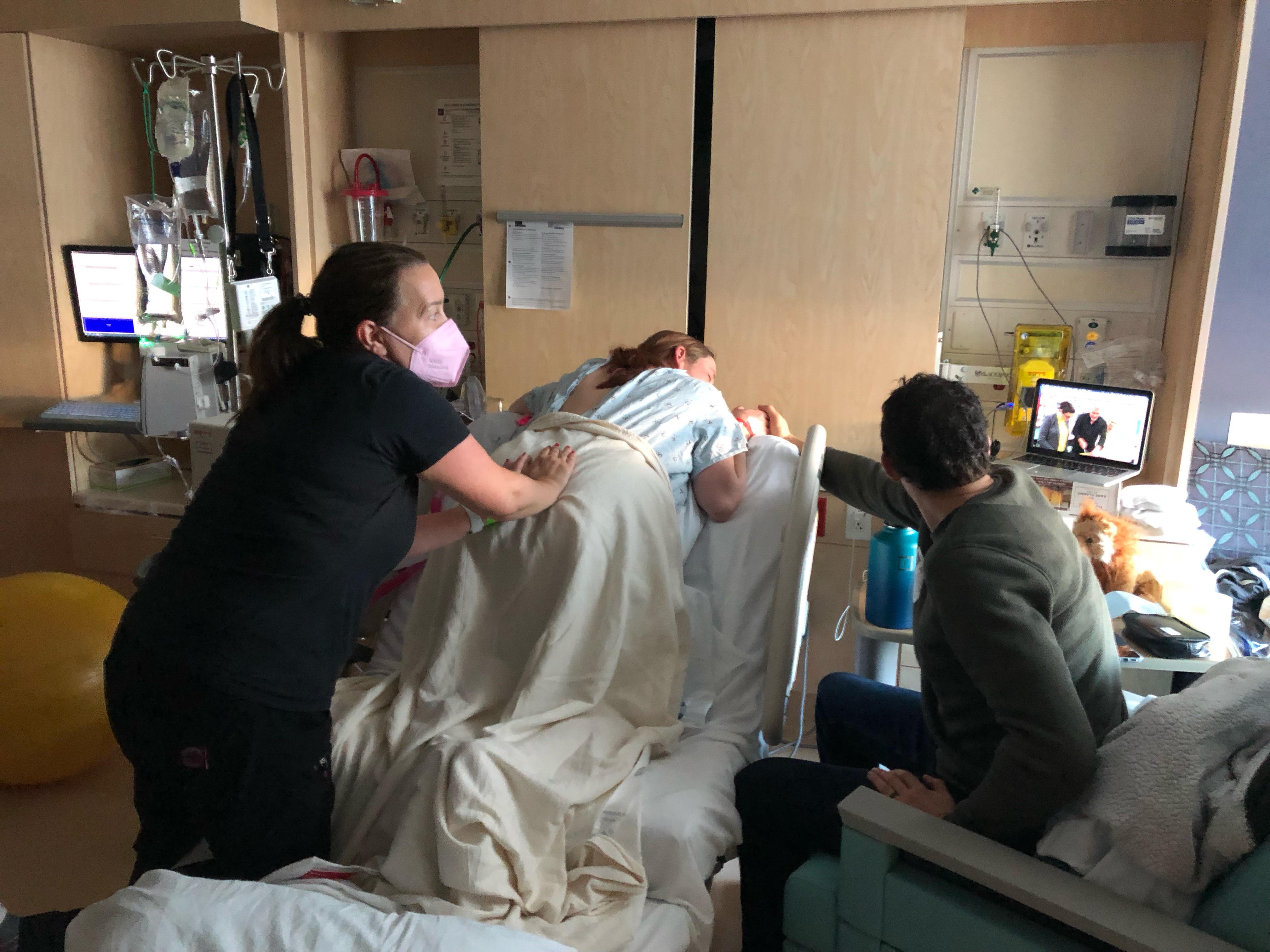
If you've heard the word 'doula' but aren't quite sure what one does, or whether a doula is the same thing as a midwife, you're not alone. This confusion comes up constantly, and it makes sense. The birth world has a lot of titles.
Let's clear it up.
Doula vs. midwife: the one-sentence version
A midwife is a medical professional who provides clinical care: prenatal visits, delivering your baby, newborn care. A doula is a non-medical professional who provides physical, emotional, and informational support: before, during, and after birth.
You don't choose between them. They do different things, and many families have both.
What a doula actually does
Doulas provide three kinds of support:
Physical support
During labor, a doula can help with positioning, counter-pressure, massage, breathing techniques, and comfort measures. They might suggest trying the shower, sitting on a birth ball, or changing positions to help labor progress. They don't replace your partner; they help your partner know what to do, too.
Emotional support
Labor is intense. Having someone in the room whose entire job is to be there for you, not checking monitors, not managing other patients, not rotating off shift, changes the experience. A doula reassures, encourages, and helps you stay grounded when things feel overwhelming.
Informational support
Your care provider might mention a clinical term you haven't heard before; a doula can explain, in plain terms, what that means. A nurse might suggest an intervention; a doula can help you ask the right questions so you understand your options before making a decision. That's not medical advice; it's making sure you have the information you need to give informed consent.
What a doula is not
- A doula is not a medical provider: they don't diagnose, prescribe, or perform clinical tasks
- A doula doesn't make decisions for you: they give you the information and support to make your own
- A doula doesn't replace your partner: they support both of you
- A doula isn't only for unmedicated births: they support all kinds of births, including epidurals, inductions, and cesareans
When a doula shows up
Most doulas offer:
- Prenatal visits: usually 1-2, to get to know you, understand your preferences, and talk through your birth plan
- On-call labor support: available by phone from early labor, then in person once active labor begins
- Continuous labor support: staying with you through the entire labor and birth, however long it takes
- Postpartum follow-up: usually 1-2 visits after you're home, to check in, talk through your birth, and connect you with resources
Does the research back it up?
Yes. A Cochrane Review, the gold standard for medical evidence, found that people with continuous doula support were:
- 25% less likely to have a cesarean birth
- More likely to have a spontaneous vaginal birth
- Less likely to use pain medication
- More likely to report a positive birth experience
As one researcher famously put it: 'If a doula were a drug, it would be unethical not to use it.'
Is a doula worth it?
That's a personal decision, not every family needs or wants one. But the research suggests that continuous support during labor makes a measurable difference in outcomes and satisfaction, regardless of what kind of birth you're planning.
If you're curious, most doulas offer free consultations. It's a low-pressure way to ask your questions, get a feel for whether the connection is right, and decide from there.
This post is for informational purposes only.